Conference Notifications:
"Be sure to check this section regularly for all Research Plus International Conference updates. We’ll keep you informed about deadlines, event details, and more important notifications."
Call for Papers Extended:
"The deadline for full paper submissions has been extended for the Research Plus International Conference in
Brno. Submit your research by today to participate in one of the top conferences."
Certificate of Presentation:
"Present your research and receive a Certificate of Presentation to recognise your valuable contribution to the conference."
Abstract Submissions Open:
"Abstract submissions for the Brno event are now open! Don’t miss the chance to present your research. Submit now."
Networking with Global Experts:
"Engage with researchers and professionals from around the world at the Brno conference. Build collaborations and gain insights from leading experts."
Keynote Speaker Sessions:
"Don’t miss our Keynote Sessions in Brno, featuring global leaders and innovators sharing their knowledge."
Best Paper & Best Paper Presentation Award:
"Submit your paper and stand a chance to win the Best Paper Presentation Award. The winner will be recognized at the conference in Brno."
SDG-Inspired Conference Focus:
"Our conference will highlight research that addresses global sustainability, inclusive education, and solutions for environmental challenges."
Conference Session Tracks
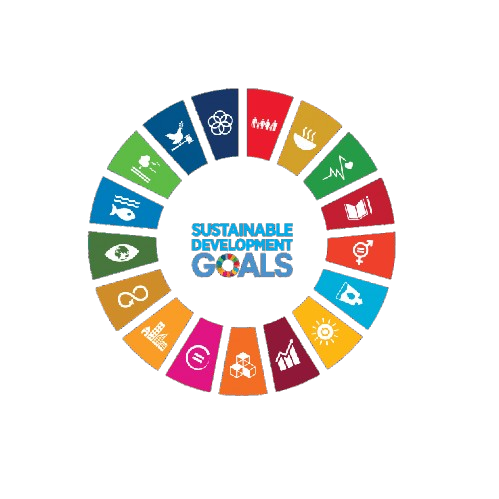
Aligned with
UN Sustainable Development Goals
This conference contributes to global sustainability by aligning its research discussions and academic sessions with key United Nations Sustainable Development Goals. It fosters knowledge exchange, innovation, and collaborative engagement.

Advancements in Inorganic Synthesis
This track focuses on novel synthetic methodologies for the preparation of inorganic compounds. Emphasis will be placed on innovative approaches that enhance yield and purity in inorganic synthesis.
Coordination Chemistry of Metal Complexes
This session explores the intricate coordination chemistry of metal complexes, highlighting ligand design and its impact on complex stability. Discussions will include the synthesis and characterization of new coordination compounds.
Structural Characterization Techniques
This track delves into various structural characterization techniques employed in the study of inorganic compounds. Participants will share insights on X-ray crystallography, NMR, and other methods that elucidate molecular structures.
Redox Chemistry of Transition Metals
Focusing on the redox behavior of transition metal complexes, this session will cover their electronic properties and reactivity. The implications of redox processes in catalysis and material science will also be discussed.
Organometallic Chemistry: Synthesis and Applications
This track highlights the synthesis and applications of organometallic compounds in various fields. Participants will present their findings on the role of organometallics in catalysis and organic transformations.
Catalytic Applications of Inorganic Complexes
This session will explore the catalytic properties of inorganic complexes, focusing on their mechanisms and efficiencies. Case studies on industrial applications and environmental implications will be presented.
Magnetic Properties of Metal Complexes
This track investigates the magnetic properties of metal complexes and their relationship to electronic structure. Contributions will include studies on spin states, magnetic interactions, and potential applications in materials science.
Supramolecular Chemistry and Complex Formation
Focusing on supramolecular complexes, this session will discuss the design and synthesis of systems that exhibit unique properties. The role of non-covalent interactions in complex stability and functionality will be emphasized.
Bioinorganic Chemistry: Metalloproteins and Beyond
This track examines the role of metal ions in biological systems, particularly in metalloproteins. Discussions will include the synthesis of bioinorganic models and their relevance to understanding biological processes.
Heterometallic Complexes: Synthesis and Properties
This session will focus on the synthesis, characterization, and properties of heterometallic complexes. Participants will explore their unique reactivity and potential applications in catalysis and materials.
Innovative Synthetic Strategies in Inorganic Chemistry
This track highlights cutting-edge synthetic strategies in inorganic chemistry, showcasing novel approaches to complex formation. Emphasis will be placed on the integration of theoretical and experimental methods in synthesis.